System design
The system, drawn to be read on a desk
Four figures. Click any of them to open it full size and scroll; each is also a file you can save.
A fictional company. The figures are illustrative; the system is real.
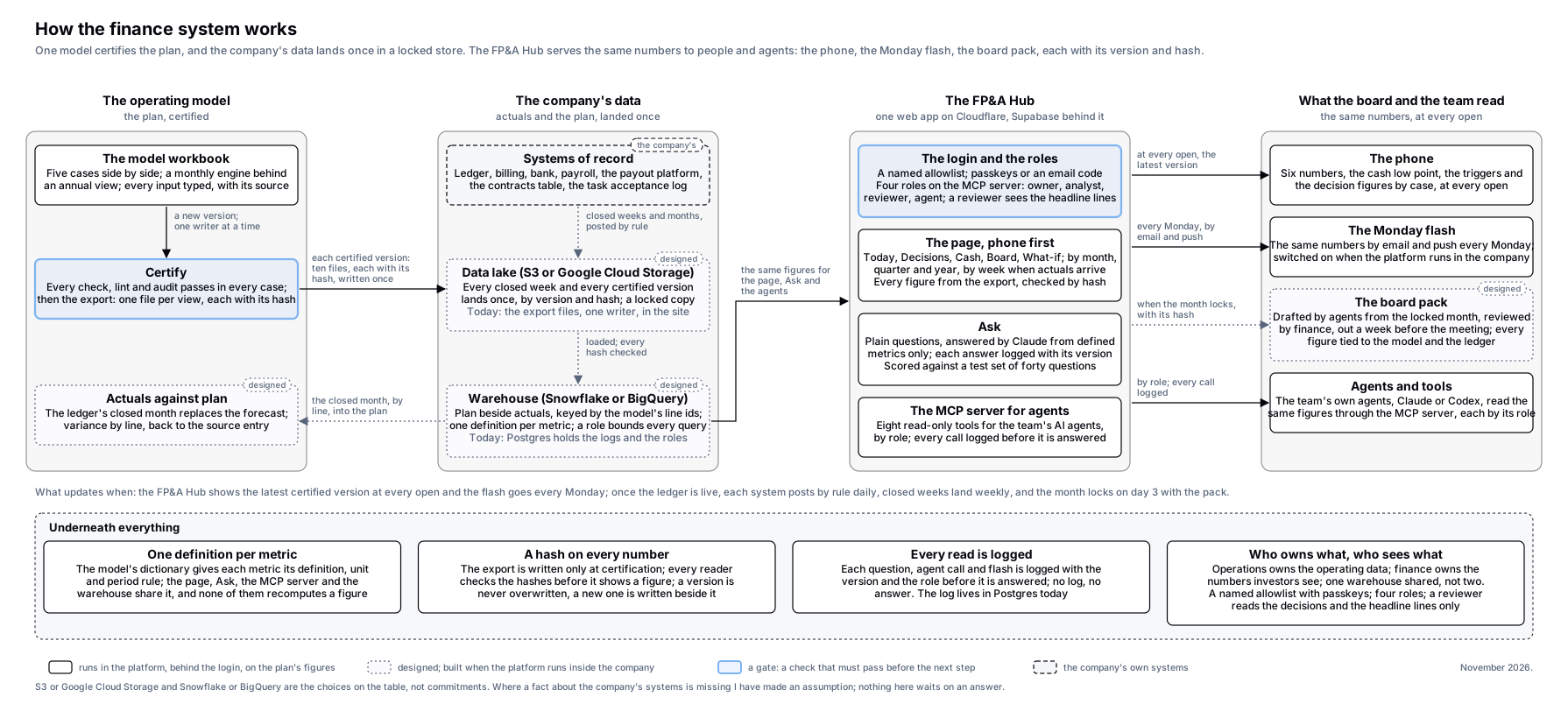
How the finance system works
Four parts, left to right. The operating model certifies the plan. The company's data lands once in a locked store, by version and hash. The hub serves the same numbers to people and agents behind one login with four roles. The board and the team read them on a phone, in a Monday flash, in the board pack and through their own agents. A dotted border marks a part that is designed and built when the platform runs inside the company; every other part runs today.
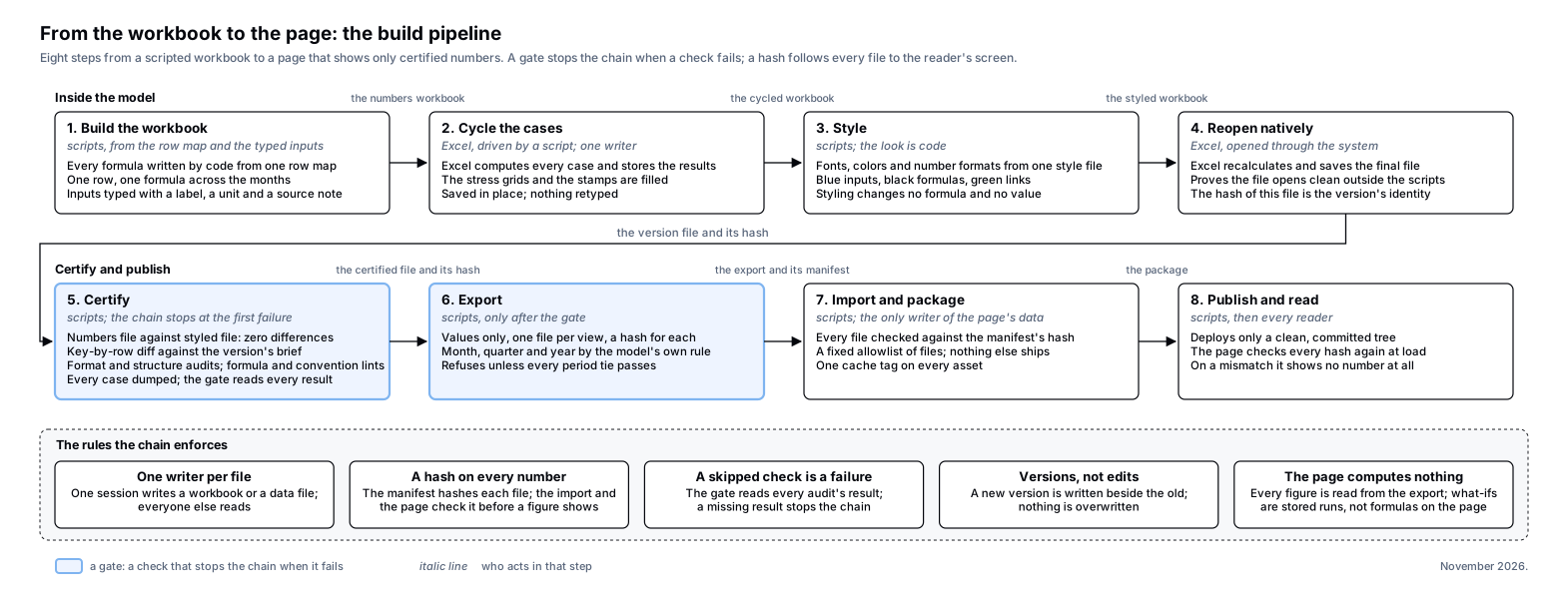
From the workbook to the page
Eight steps from a scripted workbook to a page that shows only certified numbers. Scripts write every formula from one row map, Excel fills the cases, the look is applied as code, and Excel reopens the file natively. Certification stops at the first failure. The export carries a hash for every file, the import checks it, and the page checks it again at load.
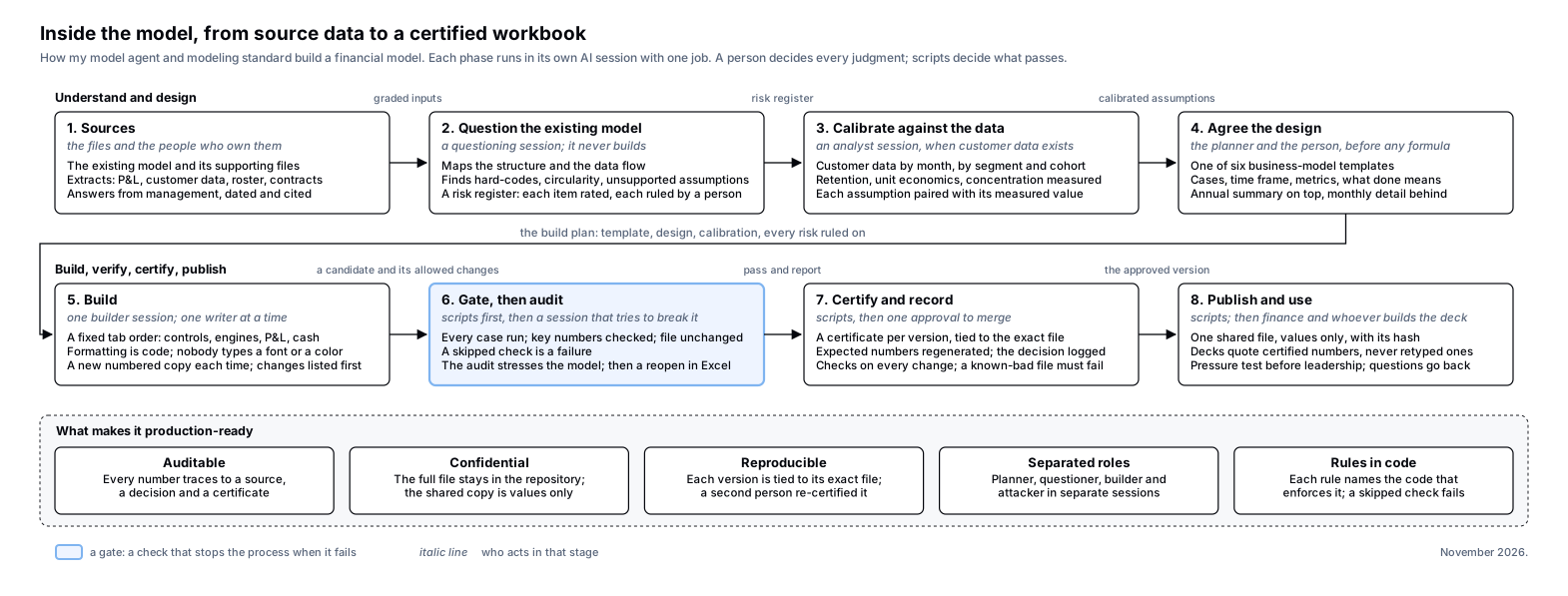
Inside the model
How a model gets built, from source data to a certified workbook. Each stage runs in its own AI session with one job: question the existing model, calibrate against the data, agree the design, build, gate and audit, certify, publish. A person decides every judgment. Scripts decide what passes.
Finance in 90 days
How I would stand up the function at a company at this stage. Cash and contracts first, then a close the auditor has seen, then a system that runs the recurring work. Three phases across, five lanes down, the gates in blue, and underneath, what finance runs on.
